.png)

Coconut Coir Packaging: The Complete Alternative to Plastic for Export Businesses

Updated: Mar 29

Your shipment of glassware is packed and palletised. The container is booked to Rotterdam. Then your freight forwarder flags two problems: the EPS foam inserts trigger an EPR fee in the Netherlands, and the timber pallets need ISPM-15 fumigation stamps — which your supplier forgot. The shipment is delayed. You absorb the cost.
This scenario plays out thousands of times a year for exporters shipping to the EU and the U.S. And it’s about to get worse. Seven U.S. states have now enacted EPR packaging laws that make producers pay for the disposal of their packaging materials. The EU’s Packaging and Packaging Waste Regulation (PPWR), which took effect in February 2025, requires all packaging to be recyclable or compostable by 2030. Coconut coir packaging sidesteps both problems entirely — and this guide shows you how.
The Regulatory Squeeze on Plastic Packaging
EPR laws are no longer theoretical. Oregon’s programme launched in July 2025 with per-violation penalties of up to $25,000 per day for non-compliant producers. Colorado’s fee invoices began January 2026. California’s fees follow in 2027. In Europe, the PPWR applies from August 2026 across all 27 member states, with mandatory recycled content targets for plastic packaging starting in 2030.
For exporters, the implication is straightforward: every kilogram of plastic packaging you ship into these markets now carries a financial liability — EPR fees, plastic taxes, disposal charges, or some combination of all three. Biodegradable, compostable packaging made from natural fibres like coconut coir is exempt from these levies in every jurisdiction that has enacted them so far.
What Coconut Coir Packaging Actually Replaces
Coir packaging isn’t a single product — it’s a complete system. We manufacture six coir packaging products that, between them, replace every piece of plastic and timber in a standard export carton:
Coir Product | Replaces | Best For |
Coir Bubble Wrap | PE bubble wrap, air pillows | Wrapping fragile goods, interleaving |
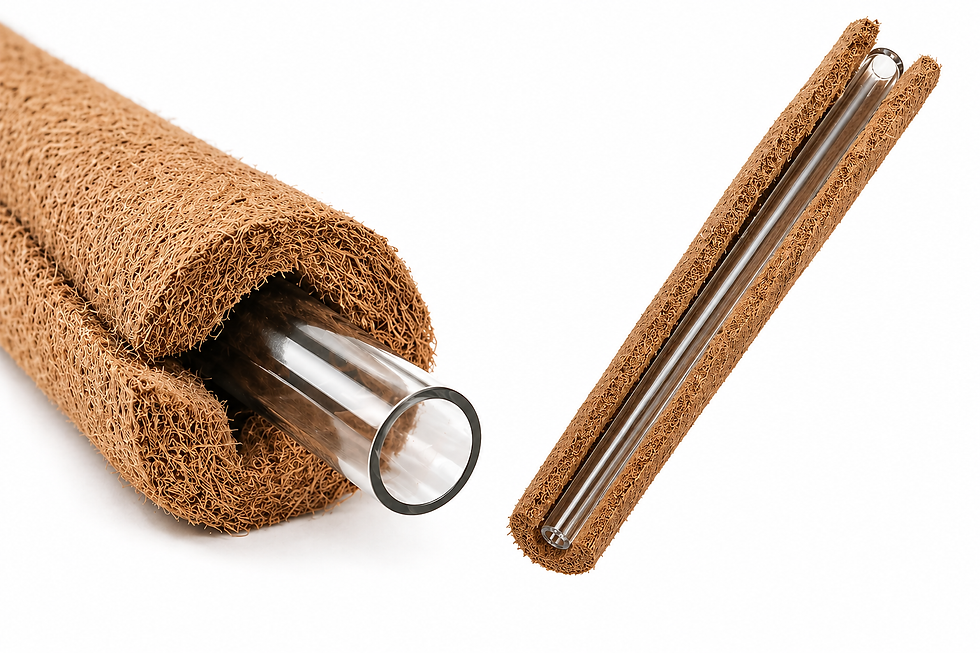
Coir Foam Cushioning | EPS (Styrofoam) inserts | Fitted inserts for electronics, glassware |
Coir Foam Block | PE/EPE foam blocks | Void-fill, cavity-cut cushioning |
Coir Corner Caps | EPS foam corners | Edge/corner protection for furniture, appliances |
Coir Pallet | Timber pallets | Export pallets (ISPM-15 exempt) |
Coir Wood Box | Wooden crates | Heavy goods shipping (no fumigation) |


Three Advantages Only a Manufacturer Would Tell You
1. ISPM-15 exemption saves time and money. Coir pallets and crates are made from compressed coconut fibre — not solid wood. That means they’re exempt from ISPM-15 phytosanitary rules. No heat treatment. No fumigation stamps. No customs delays. A 48″ × 42″ coir pallet weighs approximately 12.8 kg versus 18–25 kg for timber — that weight saving compounds across full container loads.
2. Custom-moulded inserts in 14–21 days. We engineer coir foam cushioning from your product dimensions using precision CNC aluminium moulds. From CAD file to physical sample takes 14–21 days. The inserts fit your existing cartons — no box redesign needed. This is the detail most buyers don’t expect: coir is not a generic off-the-shelf material. It’s engineered to your product, just like the EPS it replaces.
3. The weight savings are real. Coir pallets and crates are 30–40% lighter than hardwood equivalents. On air cargo, where you pay per kilogram, the freight saving alone can offset the material cost difference. On ocean freight, lighter pallets mean more payload per container.
➤ Want to see how coir packaging fits your product?Send us your product dimensions — we’ll design the insert and quote within 24 hours.WhatsApp: +91 95662 94433 |
Email: hello@adhiannamcoir.comProduct page: Coir Packaging Solutions
Honest Limitations
Not waterproof. Coir is a natural fibre. It absorbs water. For shipments exposed to direct rain or sea spray without container protection, you’ll need a poly liner inside the carton. The coir itself stays biodegradable.
Higher unit cost than commodity EPS. Virgin EPS foam is cheap because petrochemical feedstock is cheap (and subsidised). Coir costs more per unit. But once EPR fees, plastic taxes, and disposal charges are factored in, the total landed cost often favours coir — especially into the EU and California.
Lead time is 4–6 weeks. Custom-moulded inserts and pallets are manufactured to order. If you need packaging tomorrow, coir isn’t the answer. If you’re planning your next season’s production, it absolutely is.
➤ Ready to Eliminate Plastic from Your Export Packaging?
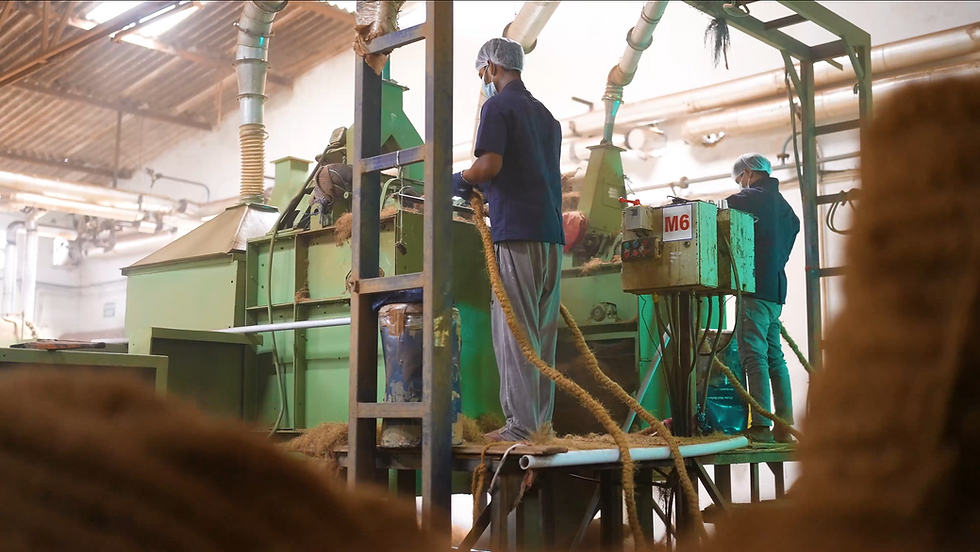
Adhi Annam Coir manufactures the full range — bubble wrap, foam inserts, corner caps, pallets, and crates — at our ISO 9001 & ISO 14001 certified facility in Coimbatore, India. We ship globally with a 4–6 week lead time.
Request a Quote or Packaging Audit:
WhatsApp: +91 95662 94433
Email: hello@adhiannamcoir.com
Product Page: Coir Packaging Solutions
Contact: Get in Touch
Related Reading
1.Proskauer Rose LLP, “Seven States and Counting: The 2025 Guide to EPR Packaging Compliance,” 2025. Source
3.Mayer Brown, “EPR Packaging Laws Moving from Concept to Compliance,” Feb 2026. Source
5.Manufacturer data: Adhi Annam Coir Comforts Pvt. Ltd., Coimbatore, India. ISO 9001:2015, ISO 14001:2015 certified.

Comments