.png)

Coir in Vertical Gardening: Greening Urban Spaces Sustainably


Cities are expanding faster than ever. As urban density increases, the demand for green infrastructure is rising alongside it. Architects, developers, and municipalities are turning to vertical gardening as a practical solution to restore greenery in limited spaces.
But the success of any vertical garden depends on one critical factor: the growing medium.
Increasingly, professionals are choosing coconut coir for vertical gardening as a sustainable, lightweight, and performance-driven alternative to peat and synthetic substrates.
Why Vertical Gardening Is Redefining Urban Design
From commercial facades to residential balconies, vertical gardens are transforming urban landscapes. Green walls improve air quality, reduce the heat island effect, enhance insulation, and elevate property value.
However, vertical systems operate in controlled, confined environments. The growing medium must be structurally stable, lightweight, and capable of maintaining balanced moisture levels without causing root stress or structural overload.
This is where coir proves highly effective.
What Makes Coir Ideal for Vertical Gardening?
Coconut coir is derived from the husk of coconuts and processed into fiber, pith, and blended substrates. When engineered properly, it becomes a high-performance growing medium suitable for vertical garden systems.
Coir maintains a low bulk density, making it ideal for wall-mounted installations where weight matters. Unlike dense soil mixes, it reduces stress on structural frames while maintaining long-term stability.
Its ability to retain water while preserving air-filled porosity makes it especially valuable in vertical gardening. Coir can hold several times its weight in water, ensuring consistent hydration while preventing waterlogging and root rot. This balance reduces irrigation frequency and supports healthy plant development.
For system integrators and landscaping companies, this means better plant survival rates and lower maintenance costs.
A Sustainable Alternative for Urban Projects
With growing environmental regulations limiting peat extraction in several regions, developers are seeking renewable alternatives that align with green building standards.
Coir for vertical gardening offers a renewable and biodegradable substrate derived from agricultural byproducts. It supports circular economy principles and aligns well with ESG-driven real estate projects.
For green-certified buildings and sustainable urban developments, coir strengthens environmental credentials without compromising performance.
Compatibility with Modern Vertical Systems
Vertical gardening systems vary widely — from modular green wall panels to hydroponic towers and drip-irrigated facades.
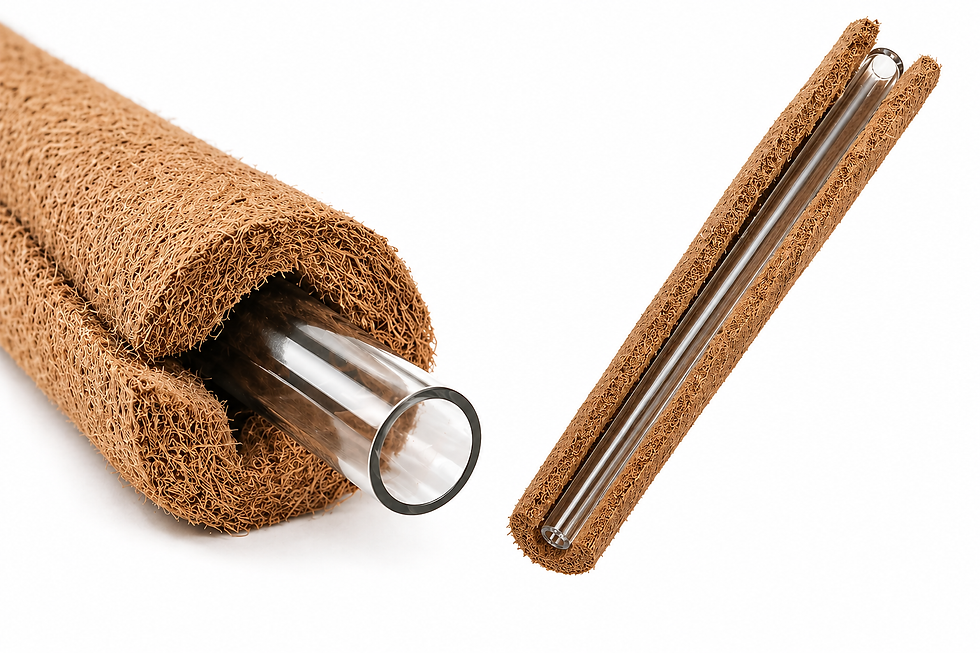
Coir can be processed into grow mats, fiber liners, compressed blocks, and custom blends to match system requirements. It integrates efficiently with drip irrigation and hydroponic setups, making it adaptable across commercial, residential, and municipal applications.
Its structural resilience ensures it maintains porosity even after repeated irrigation cycles, a critical factor in long-term green wall performance.
Commercial Applications of Coir in Vertical Gardening

Coconut coir is increasingly used in commercial building facades, hotel landscaping, shopping malls, office interiors, urban farming installations, and municipal beautification projects.
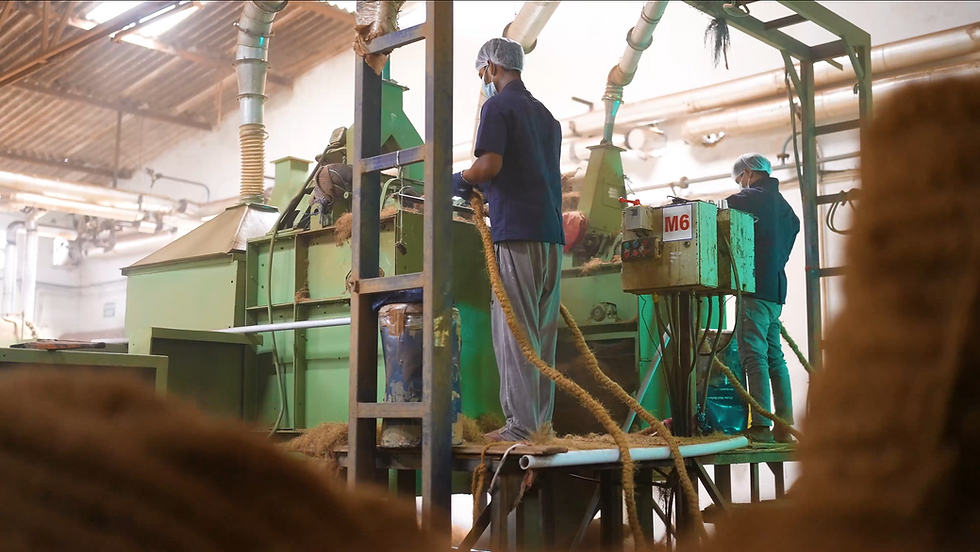
For B2B buyers, the advantages extend beyond horticulture performance. Coir’s compression ratio enables efficient container loading, reducing freight cost per unit. Bulk shipments, private label programs, and project-based supply make it suitable for international landscaping firms and green wall integrators.
Technical Considerations for Professional Buyers
When sourcing coir for vertical gardening projects, buyers typically evaluate EC levels, fiber-to-pith ratio, density, moisture content, and structural stability. Consistency across batches is critical for large-scale urban installations.
Reliable manufacturing, quality control, and export readiness play a significant role in project execution timelines. For international buyers, uniformity in substrate quality ensures predictable plant performance and system reliability.
The Future of Greening Urban Spaces
Vertical gardening is no longer decorative — it is becoming part of urban infrastructure. As cities prioritize sustainability, green architecture, and environmental resilience, selecting the right substrate becomes a strategic decision.
Coir in vertical gardening offers the balance of sustainability, performance, and scalability required for modern urban spaces.
For developers, landscapers, and distributors seeking renewable growing media solutions, coconut coir represents a forward-looking investment in greener cities.
Bulk and Project-Based Supply
We support international landscaping companies, distributors, and green wall system integrators with customized coir solutions, export-ready bulk shipments, and private label programs.
For technical specifications or project inquiries, connect with our team.

Comments