.png)

Coir Roof Panels & False Ceilings: Alternative to PVC & Gypsum


Walk into most new Indian offices, showrooms, or apartment lobbies and look up. The ceiling is almost always gypsum board or a PVC-laminated panel — materials chosen because they are cheap, familiar, and quick to install. They also do almost nothing for the building’s comfort or its carbon footprint. As India’s construction sector faces rising cooling costs and growing pressure to build greener, more architects are asking whether the ceiling can do more than just hide the wiring. A coir roof panel false ceiling — made from compressed coconut fibre — answers that question by adding thermal insulation, sound absorption, and a natural aesthetic in a single layer. Here is how it works and where it fits.
What is a coir roof panel or false ceiling?
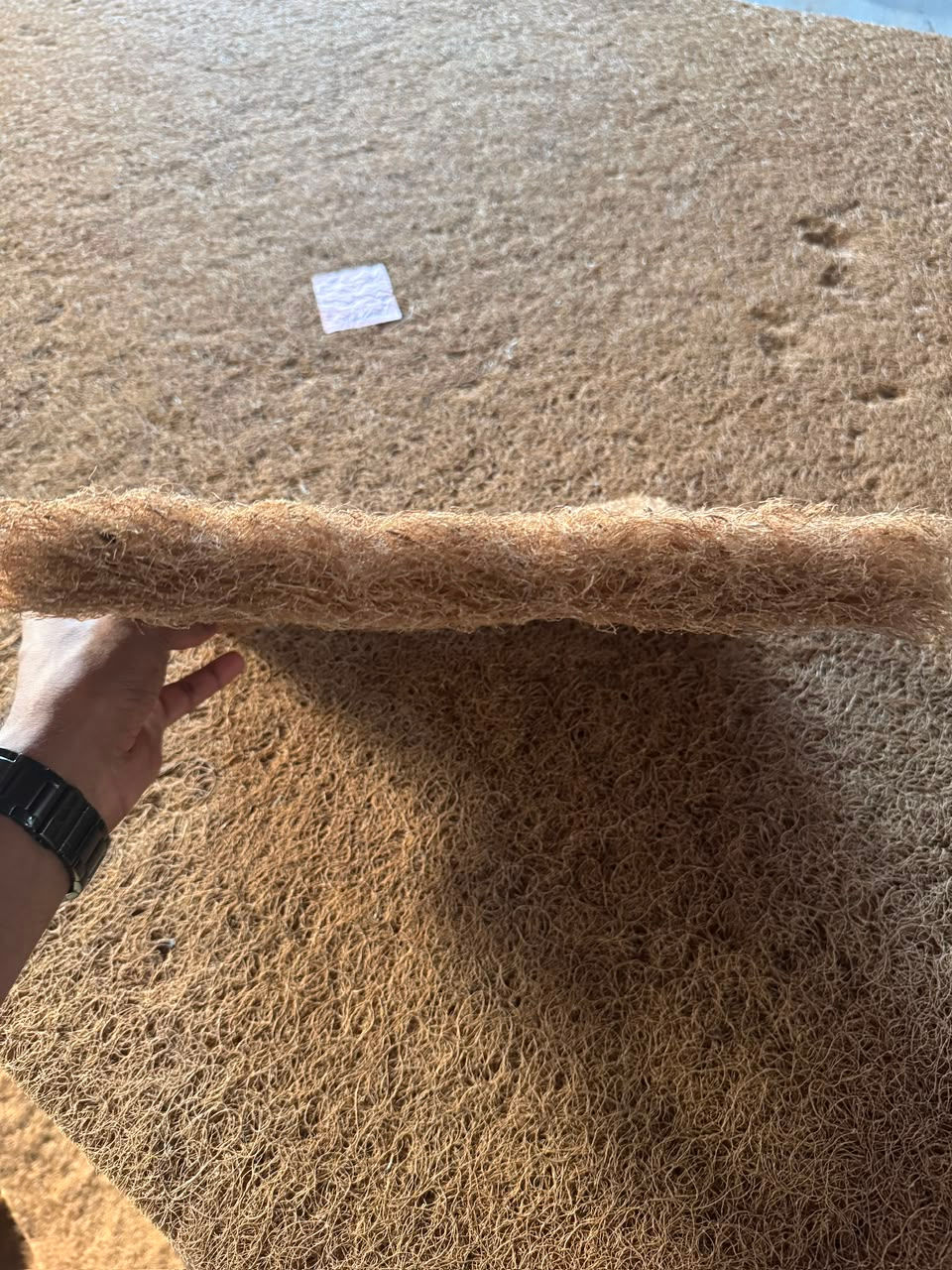
A coir roof panel is a rigid board made from compressed coconut fibre, used as an under-deck roof lining or a suspended false ceiling. It combines three functions in one layer — thermal insulation (around 0.045 W/mK conductivity), sound absorption, and a finished decorative surface — as a natural alternative to PVC panels, gypsum board, and mineral wool.
The reason coir can do several jobs at once comes down to its structure. Coconut fibre is coarse and full of tiny air pockets, and when compressed into a panel it traps a large volume of still air. Still air is an excellent insulator, which is what gives the panel its thermal value. That same porous, fibrous body also absorbs sound rather than reflecting it, and the natural weave of the surface reads as warm and organic — something designers increasingly want in biophilic interiors. Gypsum and PVC, by contrast, are dense and smooth: good at hiding services, poor at insulating or absorbing sound.
How do coir panels reduce cooling costs in Indian buildings?
Coir panels slow the flow of heat from a hot roof into the space below, thanks to their low thermal conductivity of about 0.045 W/mK.[1] In India’s cooling-dominated climate, where rooftop temperatures can cross 60°C in summer, that insulating layer reduces how hard air conditioning has to work — and cooling is the single largest energy load in most Indian commercial buildings.
This matters more every year. Space cooling demand in India is projected to rise sharply through 2030 as incomes grow and summers intensify[1]. A ceiling or roof lining that passively cuts heat gain reduces the connected cooling load, which shows up both in running costs and in the sizing of the HVAC plant a building needs in the first place. For developers chasing green ratings, that passive performance also contributes to IGBC and GRIHA credits for energy efficiency and sustainable materials — a topic worth its own discussion.
Where do coir panels fit — and where don’t they?
Coir panels suit offices, showrooms, hospitality interiors, schools, and residential ceilings where thermal comfort, acoustics, and a natural look all matter. They are less suited to wet areas without protection, and they compete on performance rather than on matching the rock-bottom price of commodity gypsum.
In practice, specifiers are using coir panels in a few clear situations:
• Under-deck roof lining — reducing heat gain through the roof slab in top-floor offices and homes.
• Suspended false ceilings — in open-plan offices and co-working spaces where speech noise and reverberation are a problem.
• Hospitality and retail interiors — where the natural texture becomes part of the design language without needing extra cladding.
• Schools and auditoriums — where zero-VOC, natural materials support both acoustics and healthier indoor air.
The honest limits: coir is a natural fibre, so in continuously damp locations it needs a protective detail or a different material. And a plain gypsum board will always be cheaper per square foot. Coir earns its place when the ceiling is expected to insulate, quieten, and look good — not when it only needs to hide a cable tray as cheaply as possible.
➤ Specifying ceilings or roof lining for a project?Share your area, mounting method, and performance targets. We’ll recommend a panel spec and can supply test data and samples for your approval records.WhatsApp: +91 95662 94433 | Email: hello@adhiannamcoir.comProduct page: Coir Interior Panels
Frequently Asked Questions
Are coir roof panels fire-safe for Indian buildings?
Coir's high lignin content gives it inherent flame resistance, and panels can be treated to meet specific fire classifications required by India's National Building Code (NBC). Because fire rating depends on the exact panel formulation and treatment, buyers should request the fire test certificate for the specific product and confirm it meets the class their occupancy type requires under NBC 2016.
How do coir false ceilings compare to gypsum board?
Coir false ceiling panels are lighter, add thermal and acoustic insulation in the same layer, and biodegrade at end of life, whereas gypsum is heavier, offers little thermal value, and is landfilled. Gypsum is cheaper per panel and has wider code familiarity in India, so coir competes on performance and sustainability rather than unit price.
Do coir roof panels help reduce cooling costs?
Yes. Coir panels deliver a thermal conductivity of about 0.045 W/mK, so a roof or ceiling layer slows heat transfer from a hot roof deck into the occupied space below. In India's cooling-dominated climate, that reduces the load on air conditioning, which is where most building energy is spent during summer months.
Can coir panels be used as both roof lining and false ceiling?
Yes. The same coir panel product serves as an under-deck roof lining and as a suspended false ceiling, because both applications need the same combination of light weight, thermal resistance, and acoustic absorption. Panel thickness and density are specified to suit the mounting method and the performance target for each location.
What sizes and finishes are available?
Coir roof and ceiling panels are made to order, so dimensions, thickness, and density are specified to the project. Surface finish options include the natural fibre texture used as a design feature in biophilic interiors, or engraved and finished surfaces for a more refined look. Custom sizing avoids on-site cutting waste.
Where are the panels manufactured and certified?
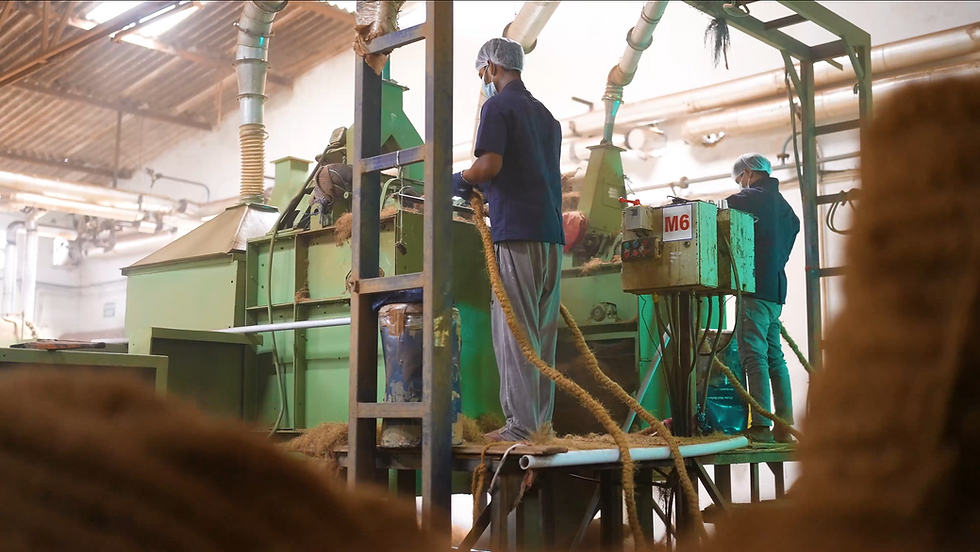
Panels are manufactured at the Adhi Annam Coir Comforts facility in Pollachi, Tamil Nadu, under ISO 9001:2015 and ISO 14001:2015 certification. The plant runs an in-house quality lab that tests density, compression, flammability, and thermal conductivity, and can supply test data for architects' specification and approval records.
➤ Request Panel Specifications or SamplesCoir roof panels and false ceilings, made to order in custom sizes, thickness, and finish. Thermal conductivity ~0.045 W/mK. ISO 9001 & ISO 14001 certified. 4–6 week lead time.
Get in touch:
WhatsApp: +91 95662 94433
Email: hello@adhiannamcoir.com
Product Page: Coir Interior Panels
Contact: Talk to Our Team
Related Reading

Comments