.png)

Coir Tube Protectors: Guarding Cylindrical Goods Without Plastic Sleeves

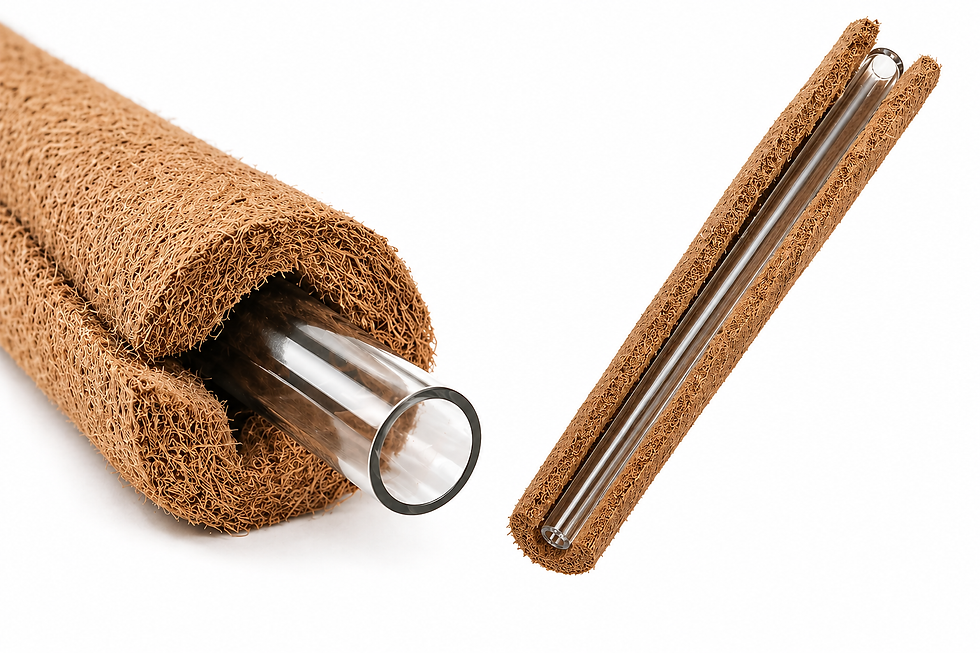
Flat things are easy to pack. Round things are not. Anyone who ships pipes, rolls, rods, or shafts knows the particular headache of protecting a cylinder — the ends get dinged, the curved surface won’t sit still, and standard flat cushioning slides right off. The usual fix is a plastic sleeve or a foam end cap, both of which end up as waste. A coir tube protector solves the same problem with coconut fibre: a fitted sleeve or end cap that cushions the length and the vulnerable ends of a cylindrical product, then biodegrades. Here is where it earns its place.
What is a coir tube protector?
A coir tube protector is a moulded or wrapped coconut-fibre sleeve that guards cylindrical goods — pipes, rolls, rods, and shafts — during shipping and storage. It cushions the length and ends of the item, replacing plastic sleeve wraps and foam end caps. It is made to fit the diameter and length of the product, and biodegrades at end of life.
The reason cylinders need their own solution is simple geometry. When a round item is dropped or knocked, the force lands on its ends and along its curved surface — not on a broad flat face that spreads the load. A fitted tube protector wraps exactly those vulnerable zones. On the ends, it acts like a cushioning cap; along the length, it cradles the curve so the item cannot roll against a hard surface. Plastic sleeves and foam caps do this today, but they leave a plastic tail. Coir does the same job and returns to the soil, slotting alongside the rest of the coir packaging range in an all-natural pack.
Which goods need tube protection — and why coir?
Cylindrical goods benefit most: metal and plastic pipes, textile and paper rolls, threaded rods, machine shafts, and tubes of film or foil. Coir suits these because its fitted, cushioning fibre cradles the curved surface and vulnerable ends, and because it biodegrades — removing the plastic-waste liability that sleeves and foam caps carry under Indian packaging rules.
The range of products is wider than it first seems:
• Pipes and tubes — metal, PVC, and composite pipes where end damage and surface scratches are common.
• Rolls — textile, paper, film, and foil rolls that need their cores and edges protected.
• Rods and shafts — threaded rods, machine shafts, and bars where end threads must not be crushed.
• Rolled goods — artwork, drawings, and rolled documents needing a protective outer sleeve.
Coir’s appeal here is the same as across packaging: it protects, it composts, and it sidesteps the plastic-waste obligations that India’s Plastic Waste Management Rules place on plastic packaging. For manufacturers and exporters shipping industrial cylindrical goods, that combination — real protection plus a clean environmental profile — is what makes the switch worthwhile.
Where does coir fall short on tubes?
Coir tube protectors match plastic sleeves for cushioning on general freight, but plastic wins where moisture resistance is essential or where unit cost must be rock-bottom. For water-exposed shipments, coir is combined with a liner. For dry land and container transport of industrial goods, coir performs the same protective job and composts afterward.
Being straight about the trade-off matters. Coir is a natural fibre, so on its own it is not a moisture barrier — a shipment sitting in standing water or heavy condensation needs a liner inside the coir, or a different material. And a thin extruded plastic sleeve is cheaper per unit than a made-to-order coir protector. The coir case is built on fitted protection, a compostable end of life, and freedom from plastic-waste liability. For the large volume of cylindrical industrial goods moving by road and container across India and to export markets, that case holds; for a cheap, waterproof, throwaway wrap, plastic still does that one narrow job.
➤ Shipping pipes, rolls, or rods in plastic sleeves?Send us the diameter, length, and end profile. We’ll make tube protectors to fit and supply samples for a handling trial.
WhatsApp: +91 95662 94433 | Email: hello@adhiannamcoir.com
Product page: Coir Packaging Solutions
Frequently Asked Questions
What is a coir tube protector?
A coir tube protector is a moulded or wrapped coconut-fibre sleeve that guards cylindrical goods such as pipes, rolls, rods, and shafts during shipping and storage. It cushions the length and ends of the item, replacing plastic sleeve wraps and foam end caps. It suits any product where the round profile and vulnerable ends need protection without plastic.
What products need tube protectors?
Cylindrical goods benefit most: metal and plastic pipes, textile and paper rolls, threaded rods, machine shafts, tubes of film or foil, and rolled documents or artwork. These items are awkward to protect with flat cushioning because force concentrates on the ends and along the curved surface, which is exactly where a fitted tube protector cushions.
How do coir tube protectors compare to plastic sleeves?
Coir tube protectors give comparable end and surface protection to plastic sleeves and foam caps for most goods, while being biodegradable and free of microplastic shedding. Plastic sleeves are cheaper per unit and offer moisture resistance, so for water-exposed shipments coir is combined with a liner. On land transport and general freight, coir performs the same protective job and composts afterward.
Are coir tube protectors biodegradable?
Yes. Coir tube protectors are made from natural coconut fibre and biodegrade at end of life, unlike plastic sleeves and EPS end caps that persist as waste. They also avoid the Extended Producer Responsibility obligations that Indian plastic-packaging rules attach to plastic, and shed no microplastics during handling or disposal.
Can tube protectors be made to fit specific diameters?
Yes. Coir tube protectors are made to order to match the diameter, length, and end profile of the product, which gives a snug fit that holds the item securely and avoids wasted material. Custom sizing is important for cylindrical goods because a loose protector slides and exposes the ends it is meant to guard.
Where are coir tube protectors manufactured?
Coir tube protectors are manufactured at the Adhi Annam Coir Comforts facility in Pollachi, Tamil Nadu, using coconut fibre processed on site, under ISO 9001:2015 and ISO 14001:2015 certification, with custom sizes available and a standard four to six week lead time.
➤ Request Custom Tube ProtectorsMade to your diameter, length, and end profile. Biodegradable, zero microplastics, plastic-sleeve replacement. ISO 9001 & ISO 14001 certified. 4–6 week lead time.
Get in touch:
WhatsApp: +91 95662 94433
Email: hello@adhiannamcoir.com
Product Page: Coir Packaging Solutions
Contact: Talk to Our Team
Related Reading


Comments