

Coir Products for IGBC and GRIHA Green Building Ratings in India


Green building certification has moved from a nice-to-have to a genuine market advantage in India. A rated building commands higher value, lower running costs, and often faster approvals — which is why more developers now design with IGBC or GRIHA credits in mind from the start. Material choices matter to that score, and this is where coir green building products fit. Coir insulation and acoustic panels, roof linings, and erosion products can contribute to the sustainable-materials, energy, and indoor-air credits that both rating systems reward. Here is how coir supports a green rating — and where its contribution realistically sits.
Do coir products earn green building credits?
Coir products can contribute to credits under IGBC and GRIHA, mainly through categories for sustainable and low-embodied-energy materials, indoor environmental quality, and energy efficiency. Credits are awarded to the project based on documented material properties, so a coir product supports specific credits as part of a wider design — it does not earn a rating on its own.
It helps to understand how these systems actually score. Both IGBC and GRIHA award points across categories — energy, water, materials, indoor environment, and more — and a building earns its rating by accumulating enough points. No single product “gets you certified.” Instead, each well-chosen material nudges specific credits upward. Coir panels help on two fronts at once: their thermal performance (around 0.045 W/mK) supports energy-efficiency credits by reducing cooling load, while their natural, biodegradable, low-embodied-energy composition supports sustainable-materials credits. The coir interior panels range is where most of this contribution comes from.
What are IGBC and GRIHA, and how do they differ?
IGBC (Indian Green Building Council, part of CII) and GRIHA (developed by TERI, endorsed by the Government of India) are India’s two main green rating systems.[1] IGBC awards Certified, Silver, Gold, and Platinum levels and is widely used for commercial and residential projects; GRIHA awards 1 to 5 stars, takes an India-first approach, and is often required for central government buildings.
The two systems share a goal but differ in emphasis, and that difference matters for material choice. IGBC, launched by the Confederation of Indian Industry in 2001, is the most commercially active system, with rating variants for homes, offices, factories, schools, and more[1]. GRIHA, developed by TERI with the Ministry of New and Renewable Energy, is explicitly India-first — it prioritises climate-responsive design, local and traditional materials, and lifecycle impact[2]. That second emphasis is where coir is especially at home: a locally abundant natural fibre with low embodied energy is exactly the kind of material GRIHA’s framework is designed to reward.

Which coir products help — and what’s the honest limit?
Coir insulation panels, acoustic panels, and roof linings help most directly, supporting energy-efficiency, indoor-environmental-quality, and sustainable-materials credits. Erosion-control products support site and landscape credits. The honest limit: coir contributes to credits but cannot deliver a rating alone — certification depends on the whole building’s design, energy, water, and site strategy.
The products that carry the most weight in a green submission are:
• Insulation panels — reducing cooling load, supporting energy-efficiency credits.
• Acoustic panels — improving indoor environmental quality and occupant comfort credits.
• Roof panels and false ceilings — combining thermal and material credits in one element.
• Erosion-control blankets — supporting site-management and soil-conservation credits on the landscape.
The straight version: specifying coir will not, by itself, earn a Platinum or a 5-star rating. Those come from the entire building — its orientation, glazing, HVAC, water systems, and site strategy working together. What coir does is contribute reliably to several credit categories at once, with the documentation to back the claim. For a project team assembling points, a material that supports energy, indoor-air, and sustainable-material credits simultaneously — and is locally made — is an efficient way to move the score. That is coir’s honest, and genuinely useful, role.
➤ Targeting an IGBC or GRIHA rating?Tell us the credits you’re pursuing. We’ll recommend coir panel specs and supply the material and test documentation your submission needs.WhatsApp: +91 95662 94433 | Email: hello@adhiannamcoir.comProduct page: Coir Interior Panels
Frequently Asked Questions
Do coir products earn green building credits under IGBC and GRIHA?
Coir products can contribute to credits under India's IGBC and GRIHA rating systems, primarily through categories for sustainable and low-embodied-energy materials, indoor environmental quality, and energy efficiency. Credits are awarded to the project based on documented material properties, so a coir panel or product supports specific credits rather than earning a rating on its own.
What are IGBC and GRIHA?
IGBC (Indian Green Building Council, part of CII) and GRIHA (Green Rating for Integrated Habitat Assessment, developed by TERI and endorsed by the Government of India) are India's two main green building rating systems. IGBC awards Certified, Silver, Gold, and Platinum levels; GRIHA awards 1 to 5 stars. GRIHA is often required for central government buildings.
Which coir products support green building ratings?
Coir insulation panels, acoustic panels, roof panels, and erosion-control products support green ratings most directly. Insulation and acoustic panels contribute to energy efficiency and indoor environmental quality credits, while their natural, low-embodied-energy, biodegradable nature supports sustainable-materials credits under both IGBC and GRIHA.
Why does GRIHA favour materials like coir?
GRIHA takes an India-first approach that prioritises climate-responsive design, local and traditional materials, and lifecycle impact. Coir fits this well: it is a locally abundant natural fibre with low embodied energy and a biodegradable end of life, aligning with GRIHA's emphasis on regionally appropriate, low-impact materials over imported synthetic products.
Can a supplier provide documentation for green building certification?
A coir manufacturer can provide the material composition, certification, and performance data that project teams need to claim green building credits. Adhi Annam operates under ISO 9001:2015 and ISO 14001:2015 certification and can supply test data on properties like thermal conductivity to support IGBC and GRIHA documentation.
Are coir building products manufactured in India?
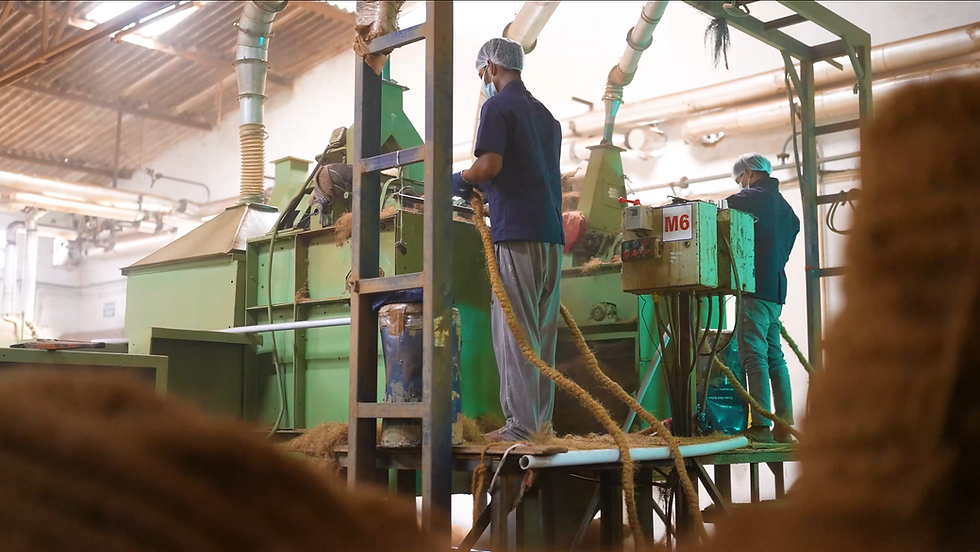
Yes. Coir building products are manufactured at the Adhi Annam Coir Comforts facility in Pollachi, Tamil Nadu, from locally sourced coconut fibre, under ISO 9001:2015 and ISO 14001:2015 certification. Local Indian manufacture supports the regional-materials emphasis of GRIHA and reduces transport-related embodied carbon.
➤ Request Green Building Product Documentation
Coir insulation, acoustic, and roof panels plus erosion products, with material and test data for IGBC and GRIHA submissions. Locally made in Tamil Nadu. ISO 9001 & ISO 14001 certified. 4–6 week lead time.
Get in touch:
WhatsApp: +91 95662 94433
Email: hello@adhiannamcoir.com
Product Page: Coir Interior Panels
Contact: Talk to Our Team
Related Reading


Comments