.png)

Carbon Footprint and Coir: How Indian Manufacturers Are Cutting Scope 3 Emissions

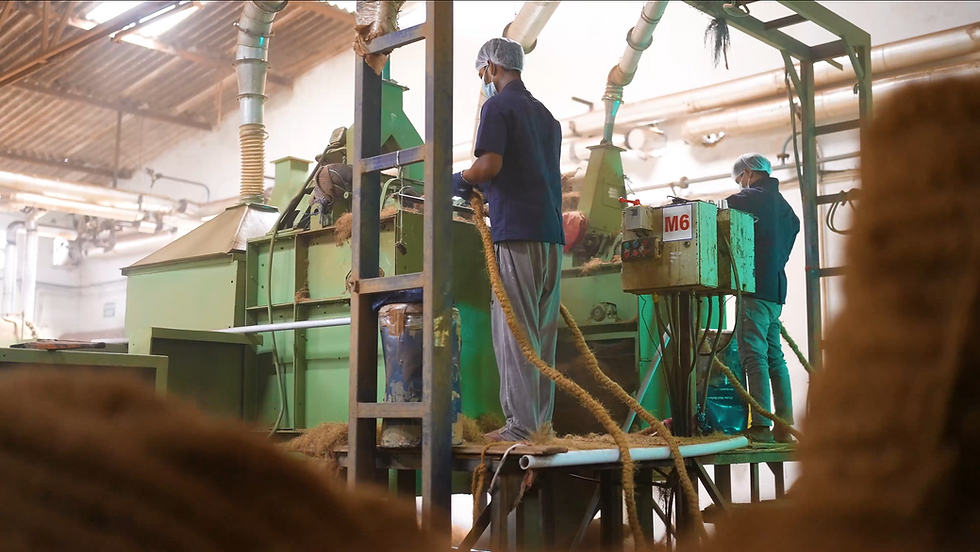
For years, cutting a company’s carbon footprint meant looking at the obvious things — the factory’s electricity, the delivery fleet’s diesel. But for most manufacturers, the biggest slice of emissions is not on their own site at all. It is embedded in the materials they buy: the packaging, the foam, the plastic, the inputs that arrive already carrying a carbon cost from someone else’s factory. This is Scope 3, and it is where the coir products carbon footprint story gets interesting. Because coir is a low-carbon by-product replacing high-carbon plastics and foams, switching to it is one of the simpler ways an Indian manufacturer can move real emissions out of its value chain. Here is how it works.
How do coir products reduce a company’s carbon footprint?
Coir products reduce a company’s carbon footprint by cutting the embodied carbon in purchased materials and packaging — emissions that sit in Scope 3. Coir is a coconut by-product that would otherwise be burned or discarded, so it carries low manufacturing energy compared with petrochemical plastics, EPS foam, and synthetic fibre. Replacing those materials removes upstream emissions counted against the buyer.
The logic is easiest to see by following the raw material. A plastic foam insert begins as crude oil, refined and polymerised through energy-intensive steps before it is ever moulded. A coir insert begins as the husk left over after a coconut is processed for its water and kernel — a residue that is often simply burned. Diverting that husk into a product uses little additional energy and keeps carbon out of the atmosphere that burning would release. So when a buyer swaps a plastic component for a coir one, they are not just choosing a greener-sounding material; they are replacing a high-embodied-energy input with a low one, and that difference shows up in their emissions accounting.
Why does Scope 3 matter for Indian companies now?
Scope 3 — the indirect emissions across a company’s value chain, including purchased materials and packaging — is often the largest part of a company’s footprint. In India, SEBI’s BRSR framework requires ESG disclosure from top listed companies, and value-chain reporting for the top 250 listed entities applies voluntarily from FY 2025-26. Large buyers increasingly ask suppliers for ESG data, pulling the whole chain in.
India’s ESG reporting landscape has moved quickly. Under SEBI’s Business Responsibility and Sustainability Report (BRSR) framework, the top 1,000 listed companies file ESG disclosures, and BRSR Core extends assured, quantitative metrics down the list in phases. Value-chain disclosure — the part that reaches suppliers — applies to the top 250 listed entities on a voluntary basis from FY 2025-26 following SEBI’s March 2025 revision. The practical effect for a mid-sized manufacturer or vendor is this: even if you are not directly obligated, your large customers may ask for the carbon data of what you supply them. Being able to show that your packaging and materials are low-carbon coir, backed by ISO 14001 environmental certification — becomes a commercial advantage in winning and keeping those accounts.

Which switches cut the most carbon — and what coir can’t do?
The biggest cuts come from replacing high-carbon materials used at volume: EPS foam and plastic packaging, synthetic insulation and acoustic panels, and plastic horticulture and erosion products. Coir cannot decarbonise a whole company on its own, and it is one lever among many — but for material and packaging emissions, it is a direct, measurable substitution.
The highest-impact swaps are the high-volume ones:
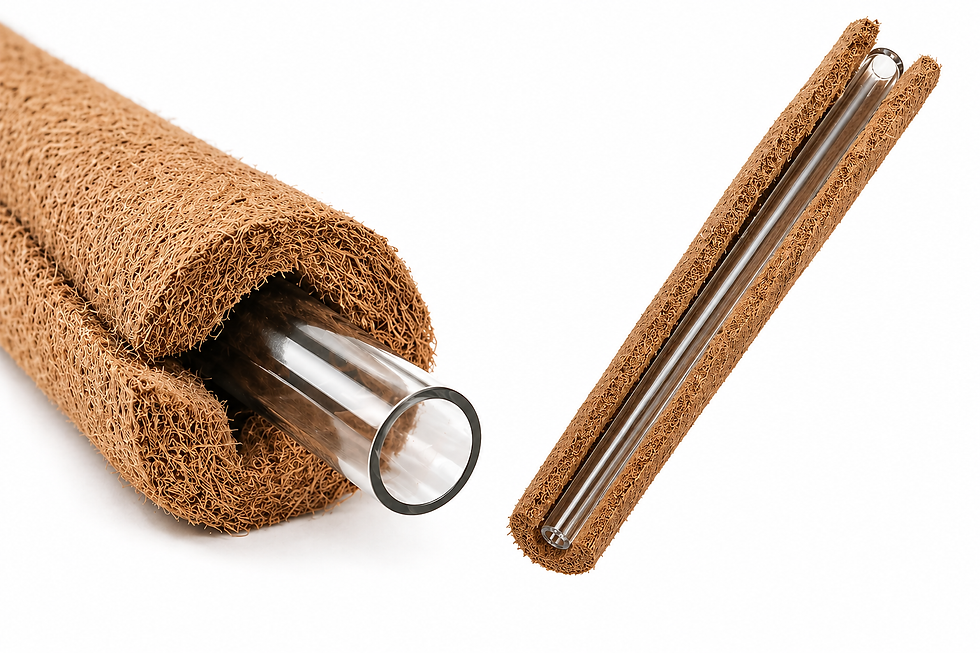
• Packaging — replacing EPS foam, plastic bubble wrap, and PE inserts, which are used in large, repeating quantities.
• Building materials — coir insulation and acoustic panels in place of mineral wool and synthetic foam.
• Horticulture and erosion — coir pots, mats, and blankets replacing plastic trays and synthetic geotextiles.
The honest framing: coir is not a carbon silver bullet. A company’s footprint also depends on its energy, transport, and processes, and coir addresses the materials-and-packaging slice, not all of it. There is also transport to account for — shipping any material has a footprint, so the gain is largest when coir displaces a high-carbon material rather than a already-local low-carbon one. Used where it fits — swapping plastics and foams at volume — coir is a genuine, documentable reduction in Scope 3, not a marketing gesture. That honesty is itself what ESG-serious buyers are looking for.
➤ Building your ESG or BRSR value-chain data?We can supply material and certification documentation to support your reporting when you switch packaging or materials to coir. Tell us what you’re replacing.
WhatsApp: +91 95662 94433 | Email: hello@adhiannamcoir.com
About us: Our Certifications & Facility
Frequently Asked Questions
How does switching to coir reduce a company's carbon footprint?
Switching to coir reduces the embodied carbon in purchased goods and packaging, which sits in a company's Scope 3 emissions. Coir is an agricultural by-product that would otherwise be burned or discarded, so it carries low manufacturing energy compared with petrochemical plastics, EPS foam, or synthetic fibre. Replacing those materials cuts the upstream emissions counted against the buyer.
What is Scope 3 and why does coir matter for it?
Scope 3 covers indirect emissions across a company's value chain, including purchased materials, packaging, and goods — often the largest share of a company's total footprint. Because packaging and input materials fall into Scope 3, choosing low-carbon, biodegradable coir over high-embodied-energy plastics and foams directly reduces the emissions a company reports against this category.
Do Indian companies have to report Scope 3 or value-chain emissions?
Under SEBI's BRSR framework, India's top listed companies report ESG data, and value-chain disclosures for the top 250 listed entities apply on a voluntary basis from FY 2025-26 following the March 2025 revision. Even where voluntary, large listed companies increasingly request ESG data from suppliers, so unlisted vendors are drawn into value-chain reporting indirectly.
Is coir actually lower-carbon than recycled plastic?
Coir generally carries low embodied energy because it is a coconut by-product requiring little processing, whereas recycled plastic still involves collection, sorting, cleaning, and re-extrusion energy, and remains a plastic that sheds microplastics. Coir's biggest climate advantage is its biodegradable end of life, which avoids the persistent waste and disposal emissions of any plastic, recycled or virgin.
Can a supplier provide data for our BRSR or ESG reporting?
A coir manufacturer can provide material composition, certification, and product information that supports a buyer's ESG and BRSR value-chain disclosures. Adhi Annam operates under ISO 9001:2015 and ISO 14001:2015 environmental management certification and can share the documentation buyers need to substantiate a switch to lower-carbon natural-fibre inputs.
Which coir products help most with carbon reduction?
The biggest reductions come from replacing high-carbon materials at volume: EPS foam and plastic packaging, synthetic insulation and acoustic panels, and plastic horticulture and erosion products. Because these are used in large quantities, switching them to coir moves more embodied carbon out of a company's Scope 3 than swapping a single low-volume item.
➤ Talk to Us About Low-Carbon Material Substitution
We manufacture coir packaging, panels, filtration, and horticulture products that replace high-embodied-carbon plastics and foams. ISO 9001 & ISO 14001 certified. Documentation available for ESG reporting.
Get in touch:
WhatsApp: +91 95662 94433
Email: hello@adhiannamcoir.com
Products: Explore the Full Range
Contact: Talk to Our Team
Related Reading


Comments