.png)

Coir Acoustic Panels: How Natural Fibre Delivers Sound Absorption Without PVC or Mineral Wool


Most acoustic panel specifications start and end with NRC rating. A mineral wool panel hits NRC 0.95. A fiberglass panel hits NRC 1.0. Spec written, box ticked. But NRC doesn’t tell you what the panel emits into the air your occupants breathe, what happens when an installer cuts it without a mask, or where it goes when the fit-out is stripped in ten years. Coir acoustic panels answer all four questions — sound absorption, indoor air quality, installation safety, and end-of-life — which is why architects specifying for LEED, WELL, and BREEAM projects are starting to look beyond the number on the data sheet.
How Coconut Fibre Absorbs Sound
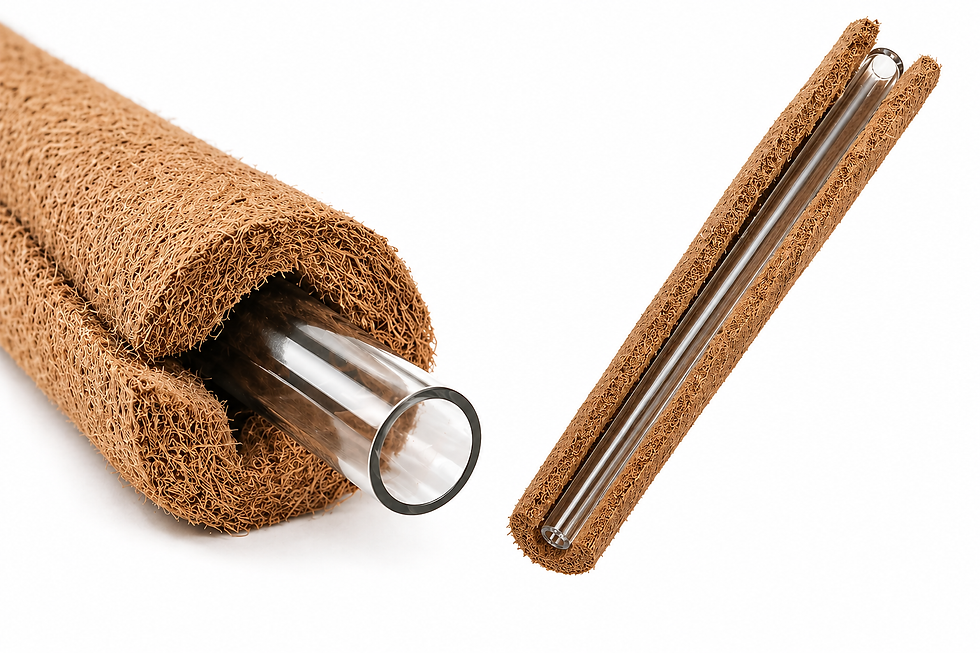
Sound absorption in porous materials works the same way regardless of whether the material is synthetic or natural: sound waves enter the fibrous matrix, bounce between fibres, and lose energy through friction, which converts acoustic energy into heat. The denser and more tortuous the fibre path, the more energy is absorbed. Coir acoustic panels are manufactured from compressed or rubberised coconut fibre at densities tuneable to your acoustic requirements. Thicker, denser panels absorb more low-frequency energy; thinner panels target the mid-to-high speech frequencies (500–2000 Hz) where most office and hospitality noise sits.
What Coir Does That Mineral Wool and Foam Don’t
Zero VOC emissions. Polyurethane acoustic foam emits volatile organic compounds for months after installation. Mineral wool panels using phenol-formaldehyde binders do the same. Coir panels emit nothing. In WELL-certified buildings where indoor air quality monitoring is continuous, that’s not a nice-to-have — it’s a compliance requirement.
No irritant fibres. Fiberglass acoustic panels require gloves, masks, and safety glasses during installation. Airborne glass fibres irritate skin, eyes, and lungs. Coir panels are cut and mounted with standard tools and no protective equipment. For retrofit projects in occupied buildings — where you can’t evacuate a floor for a fit-out — this changes the logistics entirely.
Natural flame resistance. Coir’s high lignin content gives it inherent fire resistance without chemical flame retardants. Most synthetic acoustic foams require brominated or phosphorus-based retardants to meet fire codes — chemicals that are themselves subject to regulatory phase-outs in the EU and several U.S. states.
Thermal insulation as a bonus. Coir panels deliver a thermal conductivity of 0.045 W/mK — meaningful thermal resistance from the same panel that’s handling your acoustics. In exterior-facing walls, this dual function reduces the number of materials in the wall assembly.

Where Specifiers Are Using Coir Acoustic Panels
Open-plan offices. Wall and ceiling panels reducing speech noise and reverberation. The natural texture doubles as a design element in biophilic interiors.
Hotels and restaurants. Dining rooms, lobbies, and event spaces where acoustic comfort and visual warmth need to coexist. Coir’s earth-tone aesthetic fits hospitality design palettes without fabric wrapping.
Schools and auditoriums. Classrooms, lecture halls, and assembly spaces where zero-VOC materials protect young occupants and meet institutional procurement standards.
Recording studios and theatres. Absorption panels for controlled acoustic environments where NRC performance is critical and off-gassing is unacceptable.
Home theatres. Wall-mounted panels for audio clarity in residential media rooms. Lightweight, easy to mount, no professional installation required.
➤ Need acoustic panels for a project?
Send us room dimensions and we’ll recommend panel thickness and coverage.
WhatsApp: +91 95662 94433 | Email: hello@adhiannamcoir.com
Product page: Coir Interior Panels
What Coir Acoustic Panels Won’t Do
Match NRC 1.0 in thin formats. High-density fiberglass and mineral wool panels reach NRC 0.95–1.05 at 50 mm thickness. Coir panels at the same thickness will sit lower on the NRC scale. For spaces requiring maximum absorption per square metre — broadcast studios, anechoic chambers — fiberglass remains the performance leader. For offices, hospitality, and education where NRC 0.70–0.85 is the target, coir delivers.
Sound blocking (STC). Acoustic panels absorb sound within a room. They don’t block sound between rooms — that’s a different metric (STC) and a different construction solution. Coir panels reduce reverberation and echo, not transmission through walls.
Standardised NRC certification (yet). Unlike mineral wool with decades of ASTM C423 test data from dozens of manufacturers, coir acoustic panels are newer to the market. We provide project-specific test data on request. If your spec requires a published NRC from a third-party lab, ask us for the test certificate before specifying.
➤ Request Test Data or Samples
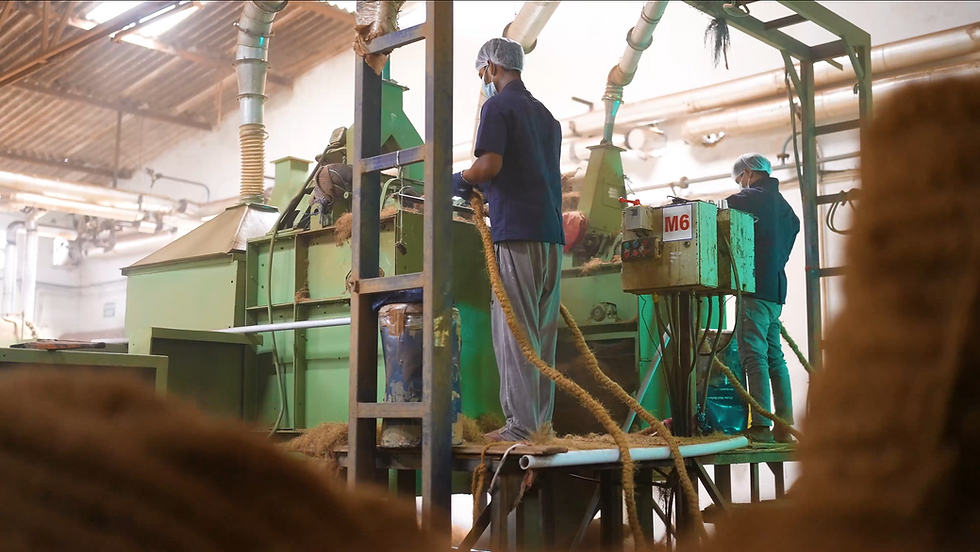
We manufacture coir acoustic panels, insulation panels, roof panels, and engraved boards at our ISO 9001 & ISO 14001 certified facility. Custom sizes, thickness, and density. 4–6 week lead time.
Request a Quote:
WhatsApp: +91 95662 94433
Email: hello@adhiannamcoir.com
Product Page: Coir Interior Panels
Contact: Get in Touch
Related Reading
Manufacturer data: Adhi Annam Coir Comforts Pvt. Ltd. Product catalog v3. Thermal conductivity 0.045 W/mK. ISO 9001:2015, ISO 14001:2015.
Building Product Advisor: fiberglass contains formaldehyde-based binders; requires gloves, masks, safety glasses. Cannot be recycled. Source
NRC testing per ASTM C423 / ISO 354. Mineral wool NRC 0.80–1.05; fiberglass NRC 0.90–1.0. Acoustical Solutions

Comments